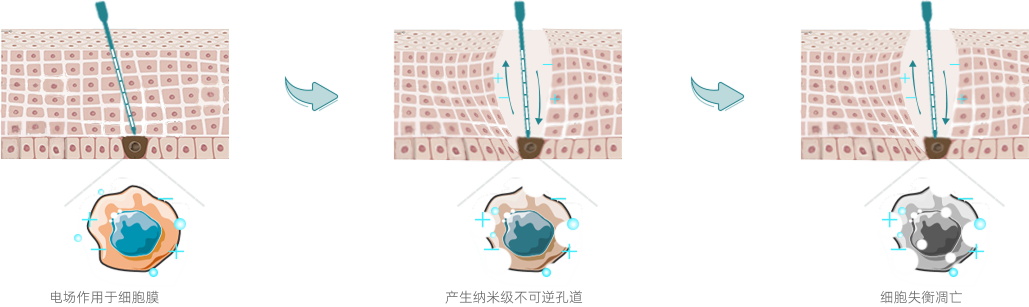
Non-Thermal Effect: Effectively prevents unintended damage to surrounding non-target areas caused by heat transfer, thereby reducing certain specific complications and adverse events.
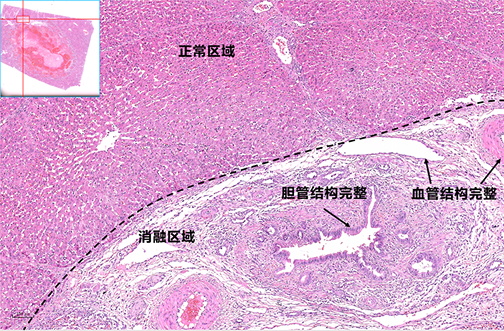
Selective Ablation: It acts exclusively on the lipid bilayer of the cell membrane, causing minimal damage to fibrous protein structures such as blood vessels and nerves, making it suitable for ablation in sensitive areas like the hepatic portal.
Multi-Needle: Expands the ablation zone through combined use of multiple needles
Controllable Ablation Zone: Customizable simulation and precision;
Procedure Under Local Anesthesia: Simple operation with reduced side effects from anesthetics.
Sharp Ablation Boundary: A transitional zone exists between the ranges of reversible electroporation and irreversible electroporation, resulting in a clearly defined ablation area.
Promotes Cellular Immunity: Releases intracellular tumor antigens, inducing both local and systemic immune responses.
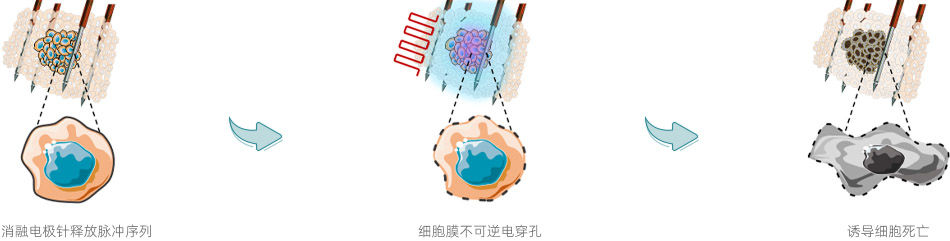
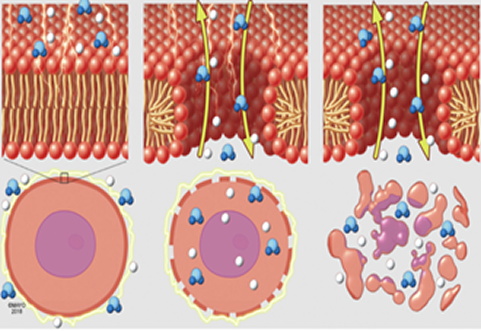
Principle: Microsecond pulsed irreversible electroporation technology involves applying 80–120 pulses with a width of 5–100 μs and a field strength of ≥1000 V/cm through dual-needle electrodes to the tumor lesion area. The pulsed electric field induces irreversible electroporation in tumor cells within the effective field coverage region, causing massive transmembrane transfer of intracellular electrolytes, ATP, etc., disrupting cellular physiological homeostasis, and ultimately leading to cell death and tumor ablation.
Inducing irreversible electroporation by targeting the cell membrane;
Inducing an anti-tumor immunological response;
tumor ablation, cardiac atrial fibrillation, and other conditions;
Severe muscle contraction, requiring injection of an adequate dose of muscle relaxant under general anesthesia.
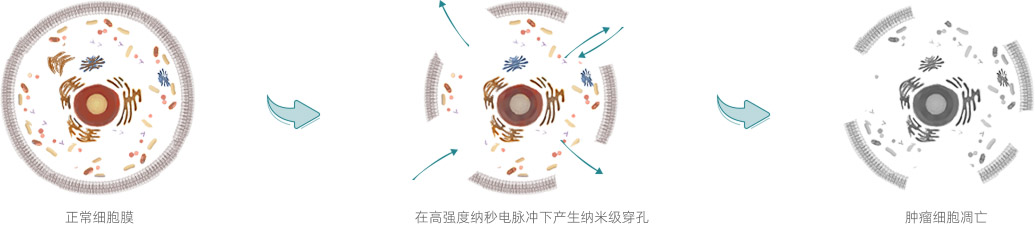
Principle: High-intensity sub-microsecond or nanosecond electrical pulses (10–100 kV/cm) contain rich high-frequency components capable of acting on internal cellular structures, inducing a series of functional changes. These include DNA damage, cytoskeletal injury, cellular swelling, calcium ion overflow, and activation of signaling pathways, ultimately leading to endogenous or exogenous programmed cell death through the targeted induction of supra-electroporation effects on the cell membrane.
Targeting the membranes of intracellular organelles to induce intracellular electro-manipulation effects.
Inducing an anti-tumor immunological response
To some extent overcomes tumor heterogeneity and enhances electric field sensitivity
High cell death threshold, broad electric stimulation range, and small death zone.
Severe muscle contraction, requiring administration of sufficient muscle relaxant under general anesthesia.

By inducing multi-site effects on cell membranes and organelle membranes through broadband spectrum-coordinated high-voltage pulsed electric fields, it causes cell death and achieves non-thermal selective ablation of lesion tissue.
Lowering the energy barrier, reducing the threshold, and expanding the ablation zone.
Overcoming heterogeneity and enhancing lethality
Inducing a stronger immunological response than single-pulse sequences.
Reducing muscle stimulation and propagation of nerve action potentials.
No muscle relaxant injection required, enabling procedures under local anesthesia