



Recently, Professor Liao Zhengyin, formerly of the Cancer Center at West China Hospital of Sichuan University, successfully performed a Wknife ablation on a 63-year-old patient with stage IV pancreatic cancer. The procedure was completed under CT guidance, using a single needle bipolar ablation approach (integrated positive negative bipolar needle) to precisely access the pancreatic lesion percutaneously, under local anesthesia with sedation. This marks the first single needle bipolar pancreatic cancer ablation using Wknife (NanoKnife) in Western China.

Patient Information: A stage IV patient after multiple lines of prior therapy, who traveled thousands of miles to seek treatment.
A 63-year-old female patient from Dalian. Following a confirmed diagnosis of pancreatic cancer, she had received multiple lines of prior therapy, including chemoradiotherapy. She also underwent biliary stent placement and percutaneous transhepatic biliary drainage (PTCD) to relieve jaundice due to biliary obstruction, as well as interventional therapy for secondary hepatic malignancies. Her current clinical stage is T3NxM1 (stage IV), with ascites. Physical examination revealed mild tenderness in the mid upper abdomen, with no other significant positive findings. Upon learning of Professor Liao Zhengyin's extensive expertise in minimally invasive tumor ablation at West China Hospital of Sichuan University, the patient and her family traveled approximately 3,000 kilometers from Dalian to Chengdu specifically to seek his care.
After multiple lines of therapy, the patient still faces persistent biliary drainage dependence and a substantial local tumor burden, leaving limited room for further intensification of systemic treatment. Following a comprehensive evaluation by Professor Liao's team, a palliative local ablation strategy was adopted to control the local lesion and reduce tumor burden, thereby creating favorable conditions for subsequent systemic therapy.

Procedure: A Single Needle Weaves Through the “Anatomical Minefield”
The pancreas is anatomically deep seated and surrounded by complex structures, including the gastrointestinal tract, bile ducts, portal vein, and superior mesenteric vessels, making it a clinical "anatomical minefield" for ablation procedures. This surgery was performed under CT guidance with local anesthesia and sedation, without the use of muscle relaxants or endotracheal intubation throughout the entire procedure. Professor Liao used a single integrated bipolar ablation needle to precisely access the pancreatic lesion percutaneously. The single needle approach simplified the puncture trajectory while maximally avoiding the stomach, intestines, and major vessels.
Leveraging Wknife's broadband synergistic technology, the patient did not receive any muscle relaxants and exhibited no significant muscle contractions during the procedure. She remained responsive and hemodynamically stable throughout. Following ablation, a drainage catheter was placed to reduce the risk of postoperative exudation. The entire procedure took less than one hour, and the patient returned to the ward safely, resuming ambulation four hours later.

Intraoperative CT imaging
This procedure was palliative in nature, aimed at achieving local tumor control and reducing tumor burden with minimal invasiveness. Through Wknife ablation, it not only reduced tumor volume but also modulated the tumor microenvironment and activated immune responses, thereby creating favorable conditions for subsequent systemic therapy.
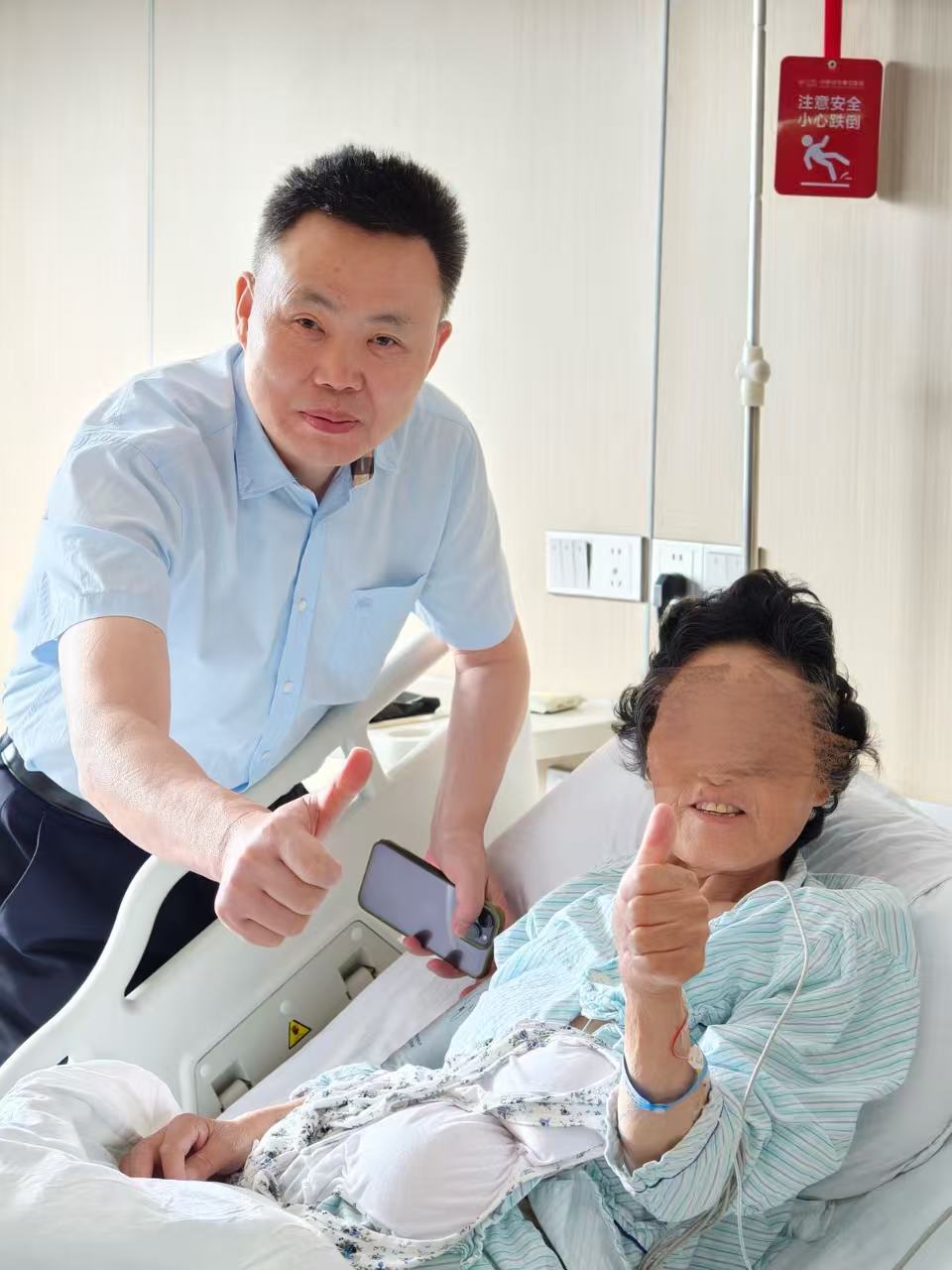
Patient ambulatory 4h post op (face blurred for privacy).
Surgeon‘s comment: Single needle ablation – safe and controllable.
Professor Liao Zhengyin commented: “The pancreas is located in a deep and complex anatomical region, surrounded by the gastrointestinal tract, major vessels, and other critical structures. Conventional NanoKnife ablation requires parallel placement of multiple needles, which increases puncture trajectories, complicates the procedure, and adds potential risks. Wknife, with its single needle bipolar design, allows the entire ablation to be performed with just one needle, resulting in a clearer puncture trajectory, simplified operation, and better controlled risks. For palliative treatment of advanced pancreatic cancer, this technological approach offers particularly significant clinical value.”
Clinical challenge: The primary difficulty in local treatment of pancreatic cancer lies in its anatomical location.
Pancreatic cancer is known as the “king of cancers” due to its high malignancy and insidious early symptoms. According to GLOBOCAN 2022 data, China has approximately 119,000 new cases and 106,000 deaths annually. The overall 5 year survival rate for pancreatic cancer is less than 10%. Because of its asymptomatic early stage, about 80% of patients are diagnosed when curative surgical resection is no longer feasible, and the median survival for advanced patients is only 6 to 9 months.
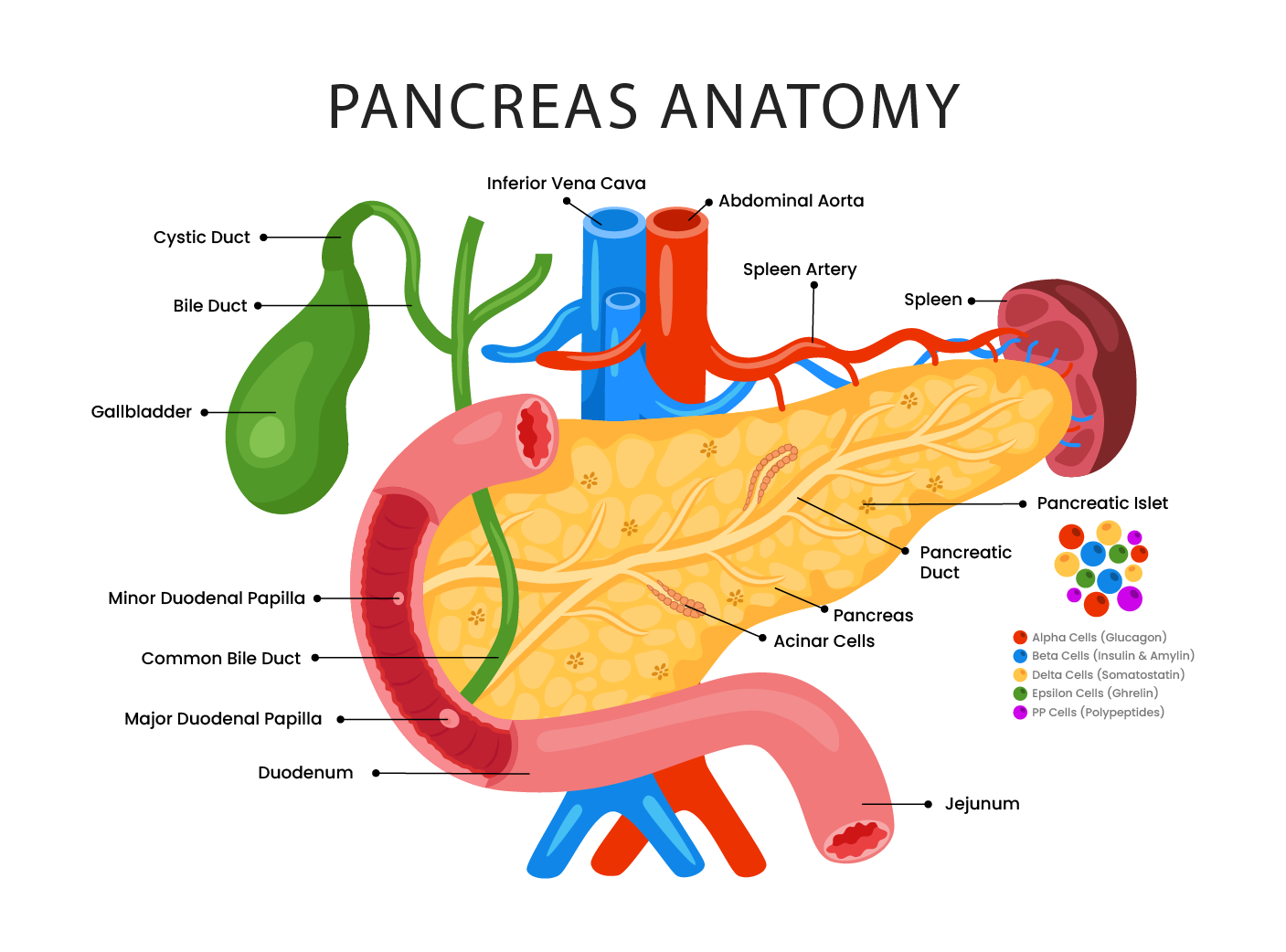 Pancreatic Cancer Anatomy: Pancreatic Head Encircled by Duodenum, with Major Vessels Traversing the Region.
The primary challenge in local treatment for pancreatic cancer lies in its anatomical location. The pancreas is deeply seated in the retroperitoneum. Its head is encircled by the duodenum, and critical structures such as the common bile duct, portal vein, and superior mesenteric artery and vein are densely distributed in the surrounding area. As the tumor progresses, it often becomes closely adhered to or even invades adjacent vessels, bile ducts, and intestines, making surgical resection and local therapy extremely challenging.
This is where the value of irreversible electroporation (IRE) comes into play. By applying high voltage pulsed electric fields to create irreversible damage to the cell membrane, IRE achieves tumor cell ablation. Leveraging its non thermal, tissue selective ablation mechanism, it maximally preserves adjacent blood vessels, bile ducts, and intestines while ablating the tumor, significantly reducing the risk of collateral damage to surrounding organs posed by the tumor's challenging location. The Chinese Expert Consensus on Irreversible Electroporation Treatment for Pancreatic Cancer has recognized IRE as an important local treatment modality for unresectable pancreatic cancer.
Clinical value: Single needle bipolar – exploring a more minimally invasive and accessible treatment pathway.
However, the clinical application of conventional IRE in the pancreas is far from straightforward. It requires parallel placement of multiple electrodes, with high demands on needle spacing, parallelism, and intraoperative imaging guidance. In a region surrounded by critical structures such as the stomach, intestines, and major vessels, every additional needle increases both the risk of inadvertent injury and the cost of consumables. Coupled with the multimillion yuan price tag of imported equipment and the steep learning curve, this technology has long been confined to a limited number of academic centers and has not achieved broader clinical adoption.
Chinese experts, represented by Professor Chen Yongliang at the PLA General Hospital, have long advocated for the development of a domestically developed electroporation technology that is both accessible and affordable for pancreatic cancer patients.
Wknife answers this call by delivering the world's first single needle bipolar, local anesthesia, muscle twitch free solution – allowing complete ablation with a single needle, reducing puncture passes, and simplifying the entire workflow. This provides a novel technical pathway for local ablation in anatomically challenging locations, minimizing the risks of operating in the "organ minefield" while also significantly reducing overall procedural costs, offering renewed hope for patients with advanced pancreatic cancer. It also marks a new milestone for China in the field of irreversible electroporation technology.
The first single needle bipolar ablation for advanced pancreatic cancer performed by Professor Liao Zhengyin's team in Western China represents a clinical exploration of this technology in the palliative setting and offers valuable experience for further refinement of minimally invasive ablation in complex tumor sites.
INTRODUCTION

Professor Liao Zhengyin, West China Hospital, Sichuan University
*Former Chief Physician and Professor at the Cancer Center of West China Hospital, Sichuan University
*M.D. from Sichuan University; Postdoctoral Fellow in Interventional Therapy at the Chinese PLA General Hospital; Master's Supervisor
*Senior Visiting Scholar in Interventional Medicine at Johns Hopkins Hospital (USA), University of Washington Medical Center (USA), and Singapore General Hospital (Singapore)
*Member of the Interventional Committee, Radioparticle Committee, and Ablation Therapy Committee of the Chinese Medical Doctor Association
*Member of the 4th and 5th Pain Society of the Chinese Medical Association, Deputy Leader of the Cancer Pain Group
*Chairman of the Interventional Medicine Committee of the Sichuan Medical Association
*Chairman of the Tumor Minimally Invasive Therapy Committee of the Sichuan Anti-Cancer Association
*Member of the Tumor Minimally Invasive Therapy Committee of the China Anti-Cancer Association
*Vice Chairman of the Pain Committee of the Sichuan Medical Association
*Academic Leader of the Sichuan Provincial Health Commission
*Editorial Board Member of Chinese Journal of Interventional Imaging and Therapy and Chinese Journal of Pain Medicine
About Winonco
Hangzhou Winonco Medical Technology Co., Ltd. is a national high-tech enterprise focused on the field of minimally invasive tumor ablation. Driven by clinical needs, the company is committed to advancing innovative medical technology R&D. At its core is a proprietary highvoltage pulsed electric field irreversible electroporation (IRE) technology, integrated into a multiphysics, multimodal platform to develop internationally leading minimally invasive tumor ablation solutions.
Founded by overseas returnees from Europe and the United States and nationally recognized scientists, the company boasts a highlevel interdisciplinary R&D team spanning electrical engineering, biology, medicine, and clinical disciplines. With its worldleading pulsed field ablation platform and clinicallyoriented system solutions, the company has been awarded key projects from the National Natural Science Foundation of China (NSFC), as well as multiple national key R&D programs and NSFC grants. Winonco holds full independent intellectual property rights in IRE technology, with over 200 domestic and international patent applications filed (including 18 PCT patents), and has twice been designated as an Innovative Medical Device. The company continues to drive technological innovation and clinical translation, delivering safer, more minimally invasive, and more accessible Chinese solutions for patients worldwide.