Technical Principles
During treatment, under the guidance of imaging equipment such as ultrasound or CT, or under direct vision during surgery, a single-use radiofrequency ablation needle is directly inserted into the tumor site. After activating the radiofrequency output, polar molecules and ions within the tumor tissue rapidly oscillate at the same frequency as the radiofrequency current, generating frictional heat that is conducted to adjacent tissues. This causes the internal temperature of the tumor tissue to rise, leading to the evaporation, drying, and shrinkage of water inside and outside the cells. When the temperature reaches 60°C, tumor cells undergo aseptic necrosis, thereby achieving the therapeutic objective.
Detailed Principle
The working principle of radiofrequency ablation is thermal damage. Through the electrode releasing radiofrequency current, molecules and other components within the tissue oscillate at high frequency with the current, converting electrical energy into thermal energy, thereby causing tissue coagulation and necrosis.
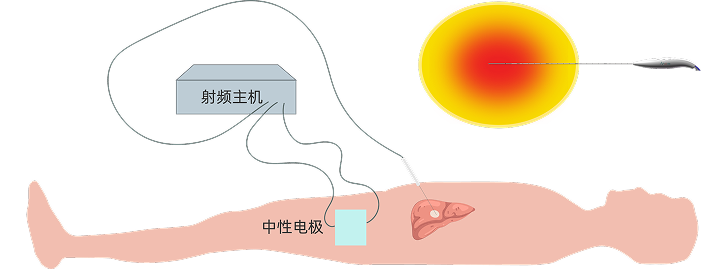
Working Principle Diagram